.png?width=239&height=25&name=Logo%20horizontal%2001%20(1).png)
An insurance producer sits at their desk on their first day of work, laptop open, email flooding in.
By month six, they've made dozens of calls.
By month twelve, they're starting to hit their stride.
By month eighteen, they're finally ramped. But your agency has already lost money for a year and a half, and 20% of new hires have already quit.
This is the silent killer in insurance sales: the ramp problem. While competitors are generating revenue with seasoned reps, your best talent is still struggling with prospect objections, policy details, and compliance hurdles.

New insurance producers take 90-180 days just to reach initial productivity, with full competence taking 12-18 months.
During this period, they're burning leads, missing objection handles, and delivering inconsistent messaging.
The cost is staggering: a fully productive insurance producer generates $200,000-$400,000 in annual revenue; an unproductive one generates essentially nothing while consuming salary, benefits, and management time.
20% of new insurance hires leave within 45 days due to poor onboarding
Here's what makes it worse: 70% of new hires decide whether they fit with your organization within the first month.
You have 44 days to influence retention. Yet most agencies lack structured onboarding milestones.
According to SHRM, 60% of employers lack clear onboarding processes—and in insurance, that gap is even wider.
New reps are thrust into call centers, given product manuals, and told to 'figure it out.' By month two, they're already mentally leaving.
Companies with formal onboarding processes improve new hire retention by 82% and reach full productivity 6-9 months faster than those using ad-hoc training.

The insurance industry's training approach hasn't evolved in 20 years. New producers attend a two week classroom session covering products, compliance, and call scripts.
They shadow a senior producer for a few weeks. Then they're on their own, armed with outdated role-plays and generic objection scripts.
This model was built for a world where knowledge was scarce and consolidation was the goal. Today, it's a liability.
The Classroom Problem
Traditional classroom training is a poor match for real sales work. It's one-size-fits-all, covering average producers instead of customizing to individual skill gaps.
Information retention drops 70% within 24 hours if not immediately applied. New producers can't practice real conversations, can't get corrected on actual call patterns, and can't build muscle memory for high-pressure objections. By the time they get to the phone, half the training is forgotten.
The Shadowing Gap
Shadowing a single senior producer teaches one person's approach and often, a person's bad habits.
What if that senior rep has a 30% close rate when the best in your office hits 60%? New hires internalize mediocre techniques and have to unlearn them later. Plus, shadowing is inconsistent.
Some reps get two weeks of quality mentorship; others get four days. Your best people don't have time to mentor properly, so learning suffers.
400,000 insurance professionals plan to leave the industry by end of 2026 due to burnout and lack of growth support
The Real Cost of Slow Ramp Time
Most agencies calculate ramp cost as salary + benefits. The actual cost is much higher.
Consider: A new producer earning $50,000 base + $15,000 benefits = $65,000/year.
If they reach productivity at 18 months instead of 6 months, that's an extra 12 months of subproductive output. But it goes deeper.
Every month of slow ramp means missed policy opportunities, failed prospect calls, and burned relationships that damage your book of business long-term.
Then factor in the turnover cost. 20% of new hires leave within 45 days. Each departure costs $8,000-$12,000 in recruitment, training time, and lost revenue.
If you hire 10 new producers this year, two will leave before they're even useful. That's $20,000 in sunk costs. Plus, the institutional knowledge they gained, however small, walks out the door.
Beyond financial metrics, slow ramp demoralizes teams. Seasoned producers watch new hires fumble calls, and top performers get pulled to mentor instead of focusing on their own books.
Client experience suffers when inconsistent producers handle renewals. Your agency's reputation takes a hit when a new producer delivers poor service.

The insurance industry faces a generational talent crisis.
50% of the insurance workforce is expected to retire within the decade.
Simultaneously, 60% of insurance employees plan to change jobs in the next 12 months, largely due to lack of career development and growth opportunities.
Agencies must onboard producers faster, train them more effectively, and create advancement paths or they'll face a talent desert.
The insurance industry is losing producers 4x faster than it can replace them. Agencies that reduce ramp time by 50% gain a competitive advantage in talent attraction and retention.
Modern Solutions: AI-Driven Coaching Transforms Ramp Time
Leading agencies have abandoned classroom training for intelligent, hands-on approaches.
AI-powered sales coaching platforms provide personalized training that meets each producer where they are, adapts to their skill gaps, and delivers real-time feedback on actual calls.
Research from Gartner shows that 85% of sales reps say real-time feedback helps them close more deals.
When combined with conversation intelligence and competency scoring, the results transform onboarding timelines.
Real-Time Coaching During Calls
Modern platforms coach producers *during* live calls, not after.
If a rep misses a buying signal, the system alerts them in real-time. I
f an objection handler isn't working, an alternative is suggested mid-call.
Post-call, detailed scorecards break down what worked, what didn't, and exactly which competencies need improvement.
This immediate feedback loop accelerates learning by months.
Personalized Scenarios & Gamification
Instead of generic role-plays, modern training platforms generate personalized scenarios based on actual prospects in your pipeline.
Producers practice with AI customer personas, each with unique objections and buying patterns.
The system adjusts difficulty based on performance- ramping up when the producer succeeds, stepping back when they struggle.
This gamified progression keeps engagement high and skill advancement accelerated.
3x faster time-to-revenue for producers trained with AI-driven personalized coaching vs. traditional classroom methods
Why Ramp Time Matters Beyond First-Year Revenue
Fast ramp time is about more than immediate revenue. It's about retention, culture, and competitive positioning.
Producers who reach competence within 6 months instead of 18 months are significantly more likely to stay with your agency long-term.
Early success builds confidence, deepens company culture integration, and creates loyalty. Those who struggle for 18 months often develop negative mindsets, feel unsupported, and start looking elsewhere.
Additionally, a culture of rapid producer development attracts top talent. Word spreads: 'This agency invests in new hires, gets them productive quickly, and sets them up for success.'
Recruitment becomes easier and cheaper. Applicant quality improves. This is how industry leaders build sustainable competitive advantages.
The Role of Analytics in Producer Development
Data-backed coaching improves rep productivity by 12% according to research from McKinsey. When agencies track exactly which behaviors correlate with success: call patterns, objection handling techniques, discovery questions, closing approaches, they can teach those patterns to new producers.
Advanced platforms capture call data, analyze winning calls against average calls, and extract replicable playbooks. New producers learn from winners, not from 20-year-old manuals.
Retention Impact: Reps receiving structured, data-backed coaching are 40% more likely to stay 2+ years and reach competence 6-9 months faster than self-directed producers.
Action: Accelerating Your Producer Ramp Roadmap
If your agency has an 18-month ramp cycle, the opportunity cost is massive.
Here's how to start compressing timelines:
First, audit your current onboarding. Do you have structured milestones and competency checkpoints, or are new hires drifting?
Second, identify your highest performers and extract their techniques—what makes them consistently successful?
Third, invest in tools that deliver personalized, real-time coaching and conversation intelligence. The ROI is immediate: faster revenue, better retention, stronger culture.
The insurance industry's talent crisis won't wait. Agencies that solve the producer ramp problem will win the next decade. Those that stick with classroom training and shadowing will watch their best talent walk to competitors who invest in modern development.
How SUPERAGENT's Training AI Agent Solves This
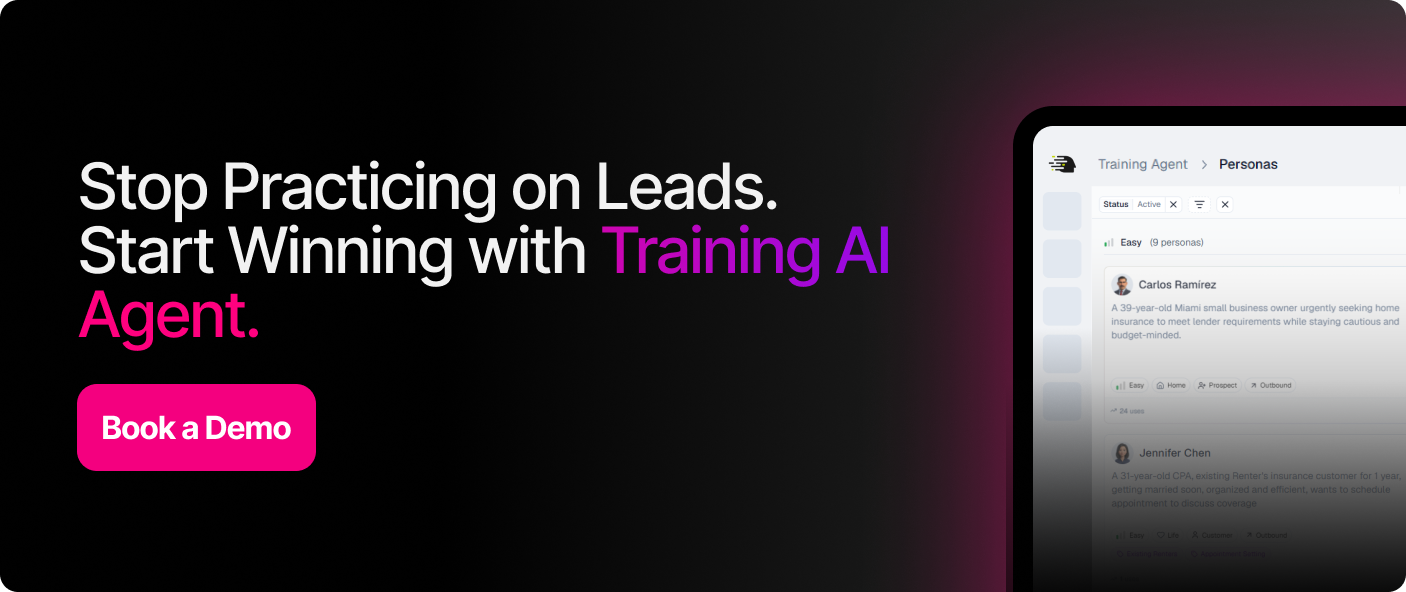
SUPERAGENT's Training AI addresses the producer ramp crisis head-on with AI-powered personalized learning. Instead of generic classroom training, producers engage with hundreds AI customer personas, each presenting realistic objections and buying signals.
The system adjusts difficulty in real-time based on performance, creates individualized competency scorecards, and delivers AI coaching feedback on every interaction.
This transforms the 18-month ramp problem into a 4-6 month acceleration.
- 300+ AI Customer Personas: Producers practice against diverse prospect types, each with unique objections, buying patterns, and compliance triggers. No two conversations are identical, building real-world resilience.
- Adjustable Difficulty & Adaptive Learning: The system detects skill gaps automatically and increases difficulty when producers succeed, decreases when they struggle. Engagement stays high; competency accelerates.
- Real-Time Adherence Tracking: AI monitors every practice interaction and tracks adherence to your playbooks, compliance requirements, and best-practice techniques. Managers see exactly where gaps exist.
- Competency Scoring & Badges: Producers earn skill certifications across call opening, discovery, objection handling, closing, and compliance. Gamification drives engagement and tracks readiness for live calls.
- Gamified Progression: Leaderboards, achievement badges, and skill trees make training engaging and competitive. Producers who love the program stick around—directly improving retention.
Results agencies are seeing:
- 3x faster time-to-revenue
- Zero burned leads on first calls
- 40% conversion lift for newly trained producers
- 82% improvement in first-year retention
Ready to compress your producer ramp from 18 months to 6? Explore how The Flight Simulator trains insurance producers 3x faster


%20(1).png?width=520&height=294&name=hf_20260618_105923_d7713a70-37c9-4b0e-9977-43dda985a28a%20(1)%20(1).png)
.png?width=520&height=294&name=hf_20260529_164843_191516b1-be0c-4714-8879-a42c3a7183b0%20(1).png)
Comments