.png?width=239&height=25&name=Logo%20horizontal%2001%20(1).png)
Insurance producer training determines whether your agency thrives or limps. Yet most agencies rely on methods that haven't changed since 2000.
Generic classroom modules, outdated roleplays, and hoping new producers figure it out don't work anymore.
This listicle breaks down 10 proven training methods that compress ramp time, improve retention, and accelerate competency.
Each method is backed by data and tested by leading insurance agencies.
1. AI-Powered Personalized Simulations
Generic role-plays with colleagues teach mediocrity.
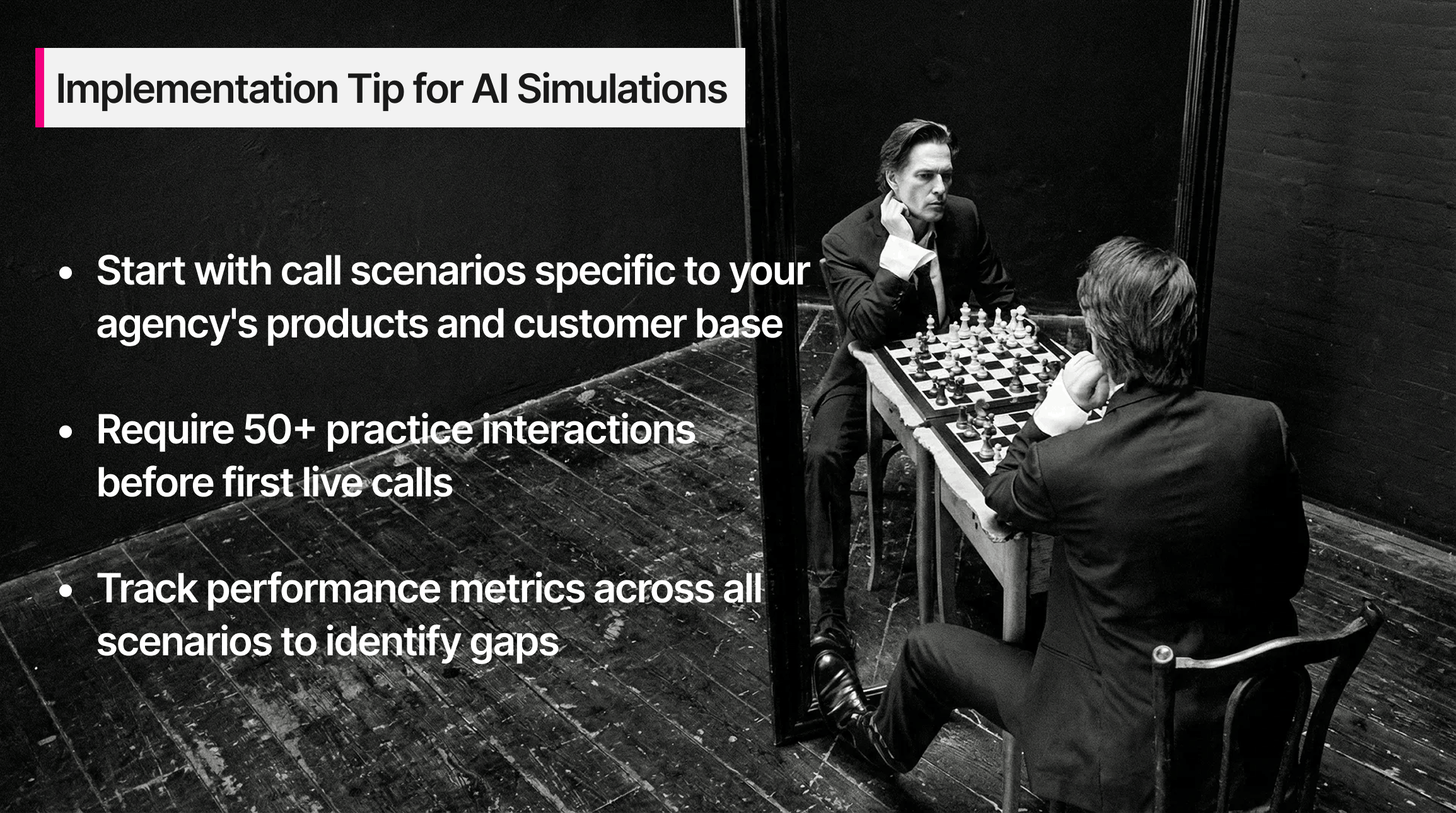
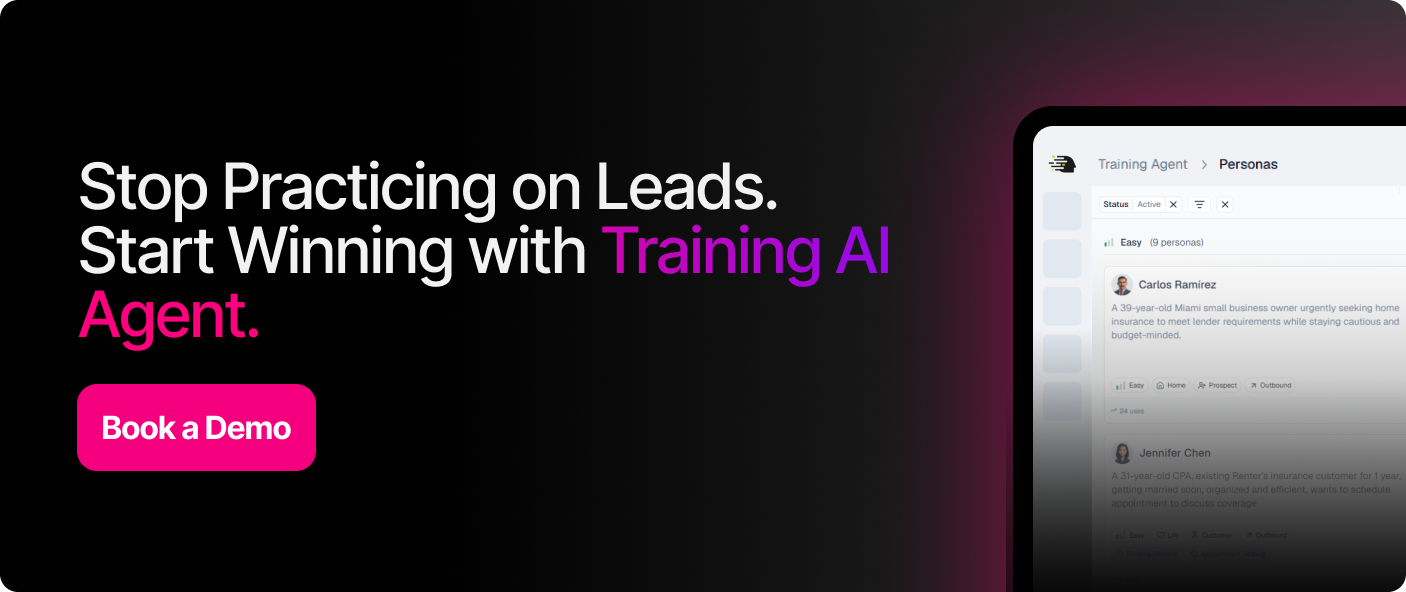
AI-powered simulations generate 300+ diverse customer personas, each with unique objections, risk profiles, and buying patterns.
Producers practice real scenarios: someone calling about a claim, a business owner exploring coverage gaps, a prospect comparing quotes.
The system records every attempt, tracks performance, and adapts difficulty in real-time.
New producers learn from realistic, diverse situations, not scripted templates.
Data shows producers trained with personalized AI simulations reach proficiency 3-4 months faster than those trained with traditional shadowing.
2. Call Coaching with AI
Post-call feedback is crucial.
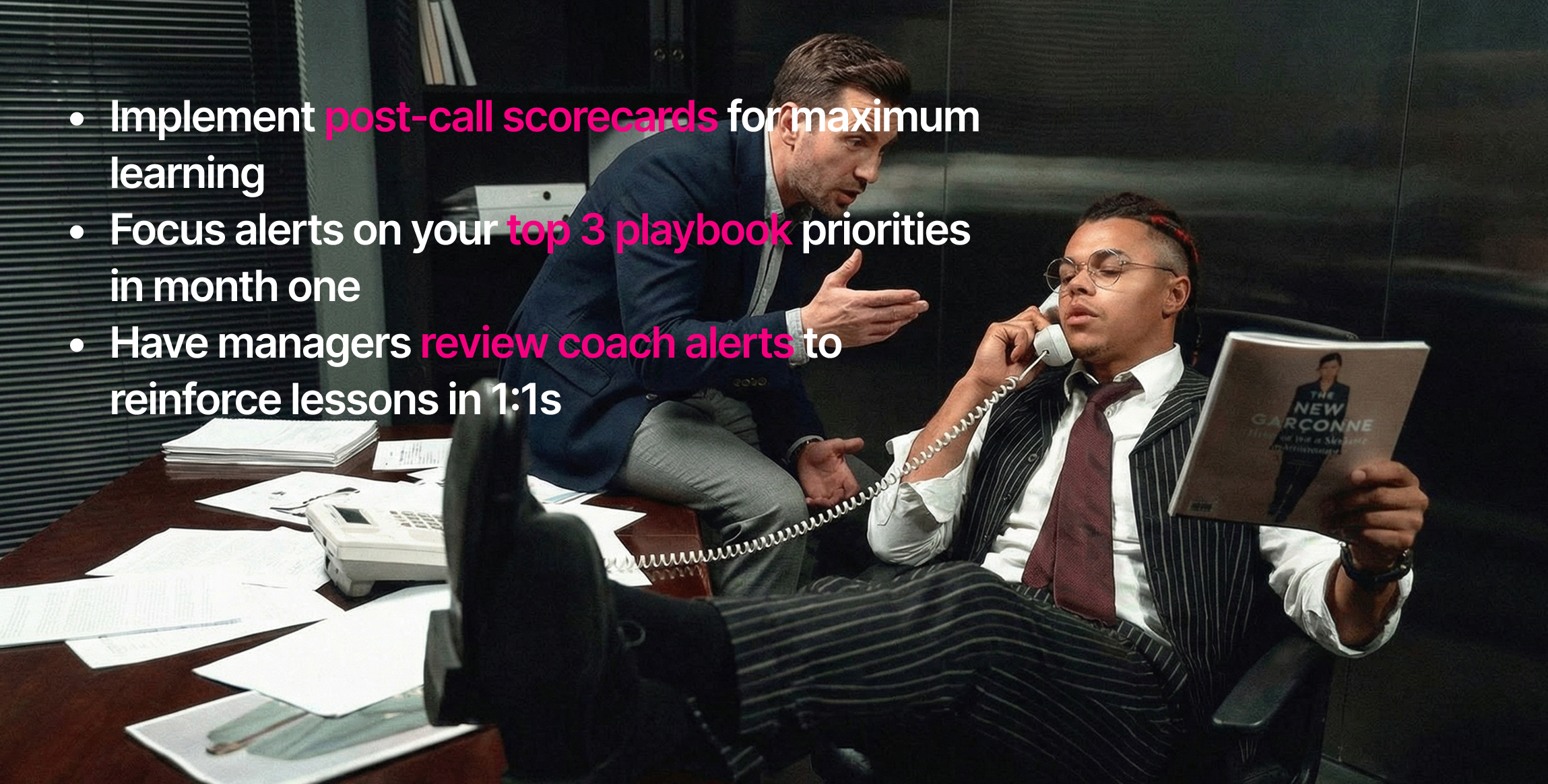
AI monitors for buying signals, missed objection opportunities, compliance risks, and messaging inconsistencies and alerts the producer after every ca;;.
After the call, detailed scorecards break down performance: what worked, what didn't, and specific next steps.
Research from Gartner shows 85% of sales reps say feedback improves deal closure.
For new producers, this feedback loop is transformational.
Agencies implementing AI call coaching see 25% faster ramp time and 40% improvement in call adherence on first-month new hires.
3. Structured Competency-Based Onboarding
Vague onboarding ('week one: products, week two: compliance, week three: shadowing') creates confusion.
Competency-based onboarding defines exactly what producers need to master at each stage and measures progress against those competencies.
Month one: opening, discovery, fact-finding.
Month two: objection handling, competitive positioning.
Month three: closing techniques, compliance scenarios.
Clear checkpoints and assessment keep new hires on track and aligned with expectations.
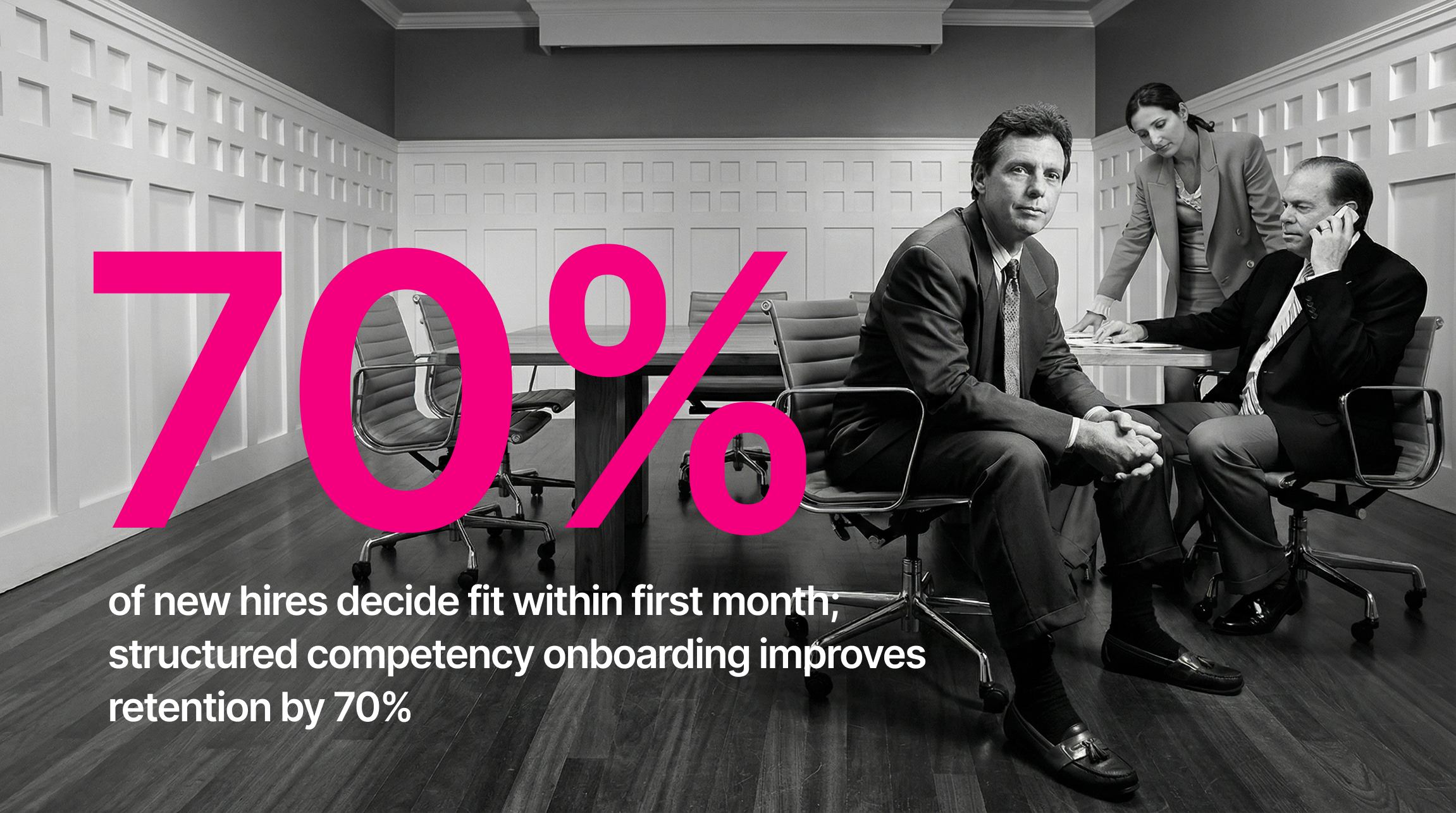
Agencies with competency-based frameworks report 65% faster onboarding completion and 70% higher retention of month-three hires compared to ad-hoc approaches.
Implementation Tip:
- Define 4-6 key competencies per month; track mastery through assessments
- Create visual progress trackers so producers see advancement clearly
- Tie bonuses or progression to competency achievement, not just activity
4. Conversation Intelligence & Playbook Extraction
Your best producer has an 60% close rate. Your average has 30%. What's the difference? Conversation intelligence captures calls, analyzes patterns, and extracts the winning playbook. Advanced systems identify which discovery questions your closer asks, which objections they anticipate, which closing techniques they use, and where they adapt based on buyer hesitation. New producers can learn this proven playbook instead of guessing.
According to McKinsey, companies implementing conversation intelligence see 20% increase in win rates because reps stop inventing their own approaches and start replicating winners.
Implementation Tip:
- Record and analyze your top 3 performers' calls monthly
- Extract 5-7 specific techniques and teach them directly to new hires
- Create call transcripts with highlighted winning moments for study
5. Structured Mentorship with Clear Ownership
Shadowing works when done right, and fails when it's ad-hoc. Structured mentorship assigns a specific high-performer to each new hire for 90 days with clear expectations: two call shadows per week, one joint call per week, weekly 1:1 feedback, and monthly progress reviews. The mentor tracks competency growth and identifies gaps. This isn't 'learn from observation'; it's active, accountable development.
New producers with structured mentorship reach productivity 40% faster than those learning independently or with casual observation.
Implementation Tip:
- Assign mentors based on teaching skill, not just sales skill
- Compensate mentors for mentoring time to ensure quality
- Create mentorship scorecards to track mentee progress monthly
6. Gamification & Leaderboard-Driven Engagement
Training boredom kills retention. Gamification—achievement badges, leaderboards, skill trees, streak tracking—keeps producers engaged and motivated. When new hires see they've earned badges for handling tough objections or mastering compliance scripts, they internalize progress. Leaderboards create friendly competition: 'I'm ranked fifth in objection handling; let me improve to fourth.' This psychological boost accelerates learning and improves first-year retention by 30-40%.
Research shows gamified training programs have 60% higher engagement and 34% higher completion rates than traditional methods.
Implementation Tip:
- Create 6-8 badges linked to real competencies (e.g., 'Object Master,' 'Compliance Champion')
- Display leaderboards on office screens to fuel competition
- Reward achievement with recognition, not just points
85% of sales reps say real-time feedback and gamification improve training motivation and skill retention
7. Regular Scenario-Based Testing & Assessments
Training without testing is wishful thinking. Weekly scenario-based assessments force active recall and identify weakness early. Month one: opening assessment. Month two: objection-handling assessment. Month three: full call simulation with scoring. Each assessment reveals competency gaps so you can remediate before bad habits form. New producers know they'll be tested, so they practice harder.
Agencies with weekly assessments identify skill gaps 8-10 weeks earlier than those relying on call reviews, allowing faster intervention.
Implementation Tip:
- Design assessments to match real call scenarios, not theoretical knowledge tests
- Share results with producers and managers weekly to track progress
- Use poor assessment results to trigger targeted coaching, not punishment
8. Product Knowledge via Micro-Learning & Spaced Repetition
Eight-hour product training days create information overload. Micro-learning delivers product content in 5-10 minute modules throughout the day, spaced over weeks. Each module focuses on one product or feature and includes a quick assessment. Spaced repetition—revisiting content over time—improves retention from 50% (one-time learning) to 85% (spaced learning). New producers absorb product knowledge faster and retain it longer.
Universities and corporate training programs consistently show spaced repetition improves long-term retention by 60-80% compared to massed learning.
Implementation Tip:
- Break product training into 5-minute modules covering one feature or scenario
- Schedule modules 2-3x per week spread over first 6 weeks
- Add quick quizzes after each module to reinforce memory
9. Cross-Functional Exposure & Relationship Building
New producers who only interact with sales teams miss critical context. Exposure to underwriting, claims, customer service, and compliance builds perspective. Why? Because it explains why you ask discovery questions—to avoid claims issues later. It shows why compliance matters—because it protects clients and the agency. New producers develop respect for the full operation and understand their role in the larger system. This drives engagement and reduces churn.
Agencies with cross-functional onboarding see 45% lower turnover in year one and higher producer satisfaction with company culture.
Implementation Tip:
- Schedule shadow sessions: one day each with underwriting, claims, and CS in first month
- Have department leaders explain how sales decisions impact their work
- Create lunch-and-learns where underwriters share common claim issues
10. Peer Learning Groups & Cohort-Based Accountability
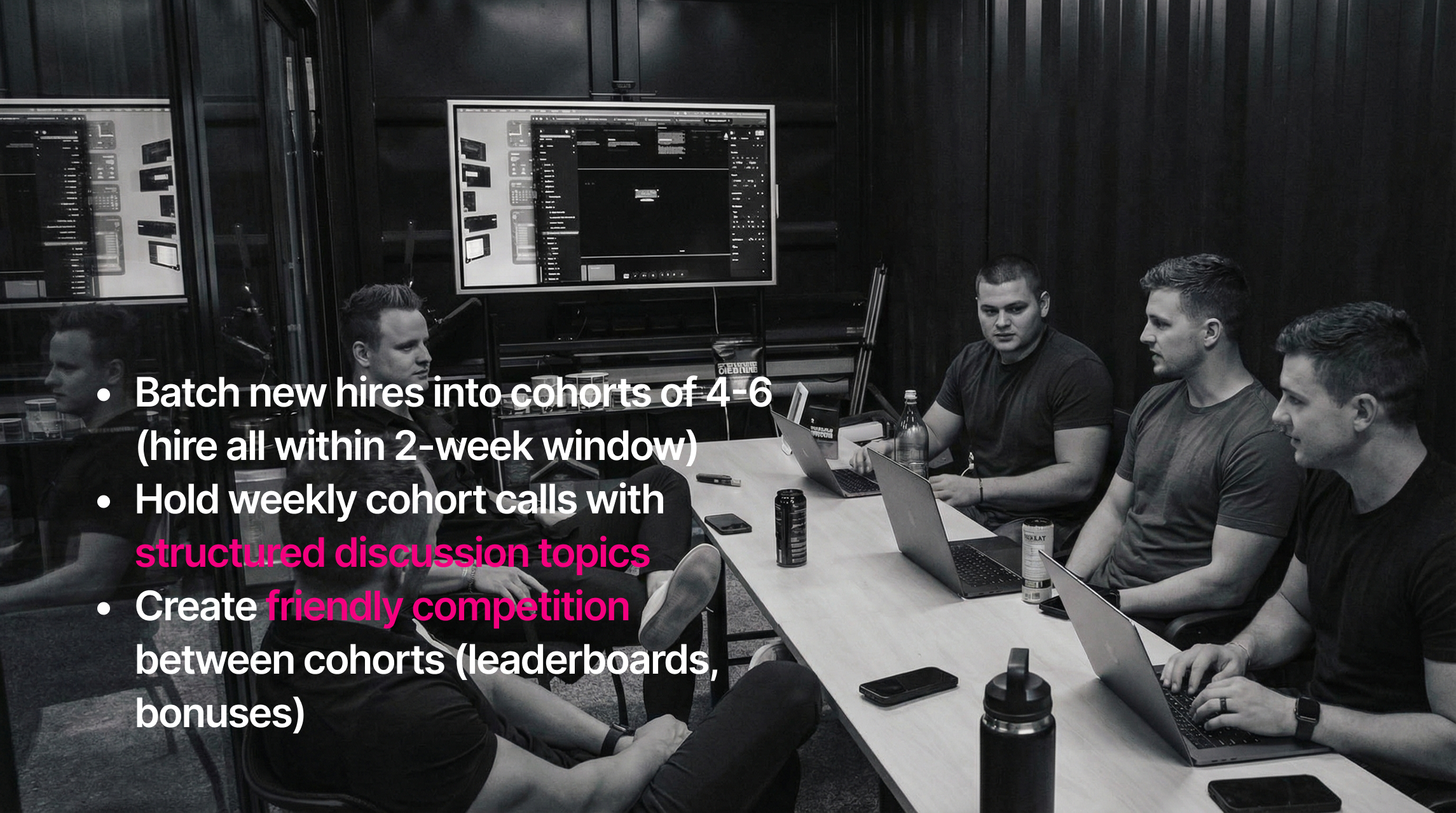
Isolation kills new hire motivation. Cohort-based training—bringing new hires together in groups—creates peer accountability and reduces isolation. New producers study together, share wins and struggles, and hold each other accountable. Weekly cohort meetings with structured discussion ('what objection surprised you this week?', 'what worked in your calls?') accelerate learning and build camaraderie. New producers who go through cohorts together are 35% more likely to stay beyond year two.
Social learning—learning alongside peers—increases motivation and retention compared to individual learning tracks. Cohort graduates often become mentors to future cohorts, creating a self-sustaining training culture.
Implementation Tip:
The Data-Driven Path to 50% Faster Ramp
These 10 methods aren't all-or-nothing. Leading agencies combine personalized AI simulations with real-time coaching, structured mentorship with gamification, and competency tracking with peer learning. The agencies that implement 6-8 of these methods see 50% reduction in ramp time and 40% improvement in retention. Start with your biggest pain point and add methods progressively. Track metrics—time-to-first-call, time-to-competency, 30-day retention—and iterate based on data, not gut feel.
The insurance industry's talent shortage demands faster, smarter training. Agencies that master these methods will attract and retain producers competitors can't reach.
How SUPERAGENT's Training AI Agent (The Flight Simulator) Solves This
SUPERAGENT's Training AI consolidates these 10 methods into a single platform. The Flight Simulator delivers AI-powered personalized simulations (method #1), real-time call coaching (method #2), competency-based onboarding (method #3), gamification (method #6), and scenario-based testing (method #7)—all integrated into one system. Agencies using Training AI see all 10 methods working together, compressing what used to take 18 months into 6 months.
- AI Simulations with 300+ Personas: Practice with diverse, realistic customer types. Every scenario is different, building real-world resilience.
- Real-Time & Post-Call Coaching: Live alerts during calls + detailed post-call scorecards. Immediate feedback loop accelerates competency.
- Competency Tracking & Badges: Clear monthly competencies with visual progress. Producers and managers see exactly where mastery stands.
- Gamified Leaderboards: Badges, achievement tracking, and friendly competition drive engagement and retention.
- Integrated Assessment Engine: Weekly scenario tests reveal gaps early. Assessments are real call simulations, not knowledge quizzes.
Results agencies are seeing:
- 3x faster time-to-revenue
- 40% conversion lift vs. traditionally trained reps
- Zero burned leads with pre-call simulation
- 82% improvement in 6-month retention
Implement all 10 training methods in one platform. See how agencies compress producer ramp from 18 months to 6 with AI-driven Training.

%20(1).png?width=520&height=294&name=hf_20260618_105923_d7713a70-37c9-4b0e-9977-43dda985a28a%20(1)%20(1).png)
.png?width=520&height=294&name=hf_20260529_164843_191516b1-be0c-4714-8879-a42c3a7183b0%20(1).png)
.png?width=520&height=294&name=hf_20260514_203535_fe46ef0c-e635-4559-98d1-2214b14d77d0%20(1).png)
Comments