.png?width=239&height=25&name=Logo%20horizontal%2001%20(1).png)
Three years ago, we brought SUPERAGENT AI to ITC for the first time. We talked about AI for insurance agencies, and people looked at us like they were visiting a science fair.
This year, walking the floor in Las Vegas felt completely different. AI was on almost every booth, every stage and every conversation. The question agencies were asking was no longer "Is AI real?" It was "Which AI actually works for my agency?"
We are proud to have been part of that conversation from the beginning, and even prouder of how far our customers have come since then. Here is what happened in Vegas, what agency owners told us, and the three things we are taking home.
We didn't show up to AI. We started there.
Three years ago, most people walked past our booth thinking AI was a novelty. This year, AI was on every banner on the floor. That is a good thing for the industry. It also makes it harder for an agency owner to tell the difference between a company that added AI to its slide deck and a company that was built on it.
Here is the difference. We didn't join AI because it was cool or because of the hype. SUPERAGENT AI started as an AI company, built for insurance agencies from day one, and trained on real human insurance calls: the way your producers and CSRs actually talk to customers.
Under the hood is a customized version of the world's leading AI model, built for insurance agencies. On top of it is three years of learning how agencies really sell and service. That is why SUPERAGENT AI already knows what a LOB is, what an X-date means, and why a renewal 45 days out matters more than a cold lead.
What happened at ITC Vegas
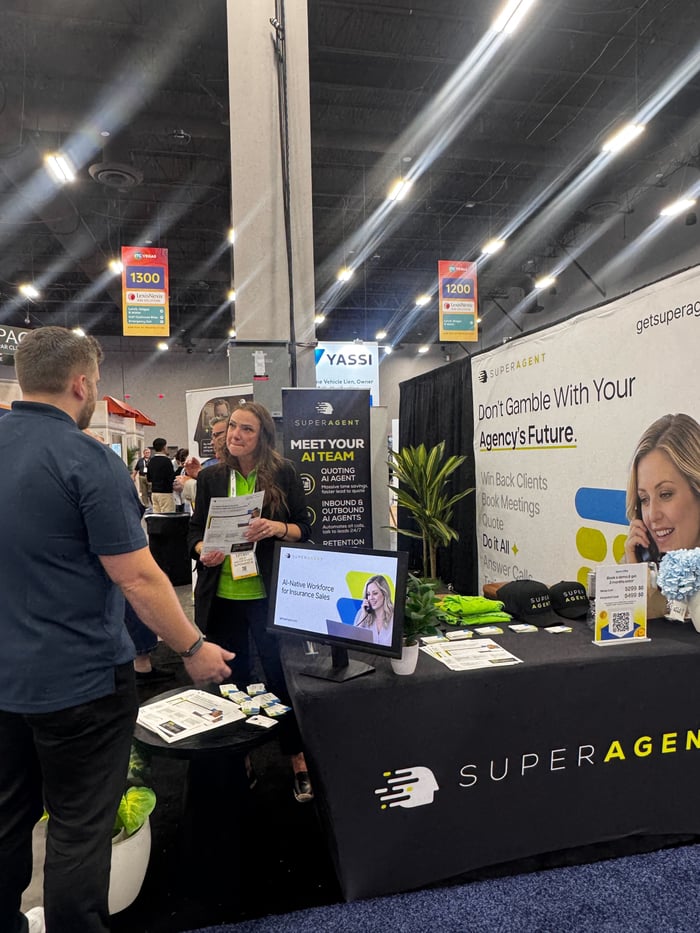
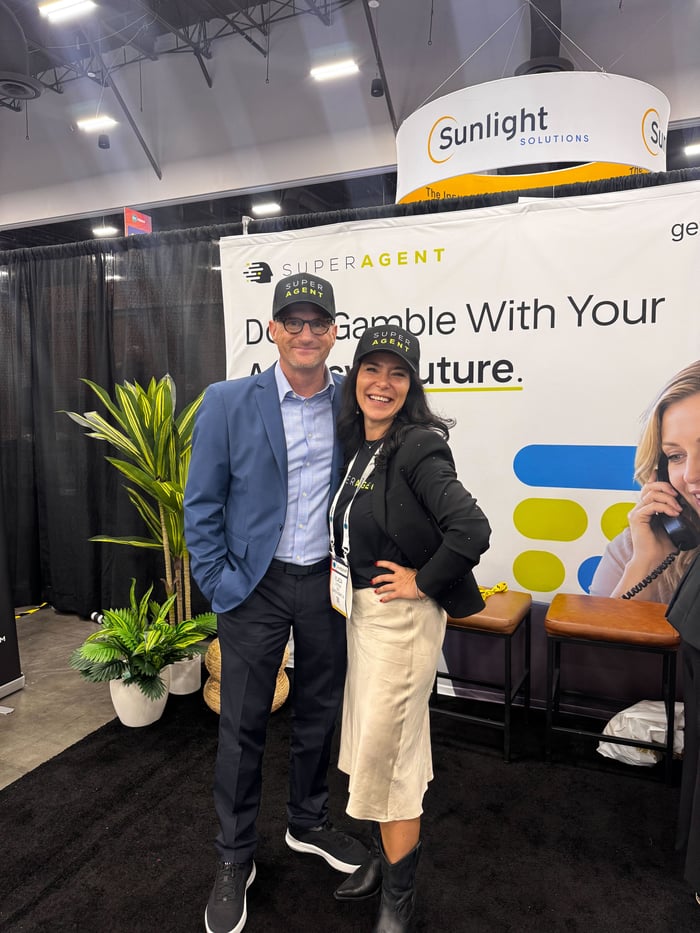
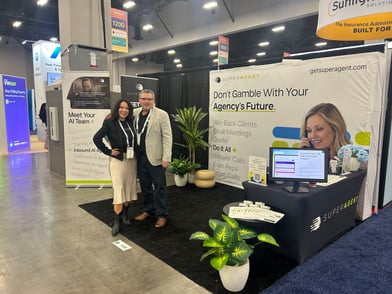
Our booth was packed. Agency owners, producers, carriers and MGAs came by to see AI Agents built specifically for insurance agencies, not a generic chatbot with an insurance logo on it.
The best demos were not the ones we planned. They were the ones where an owner pulled out a phone, described a real problem from last Tuesday, and asked us to show how SUPERAGENT would handle it.
.jpg?width=700&name=IMG_1344%20(1).jpg)
.jpg?width=700&name=IMG_1348%20(1).jpg)
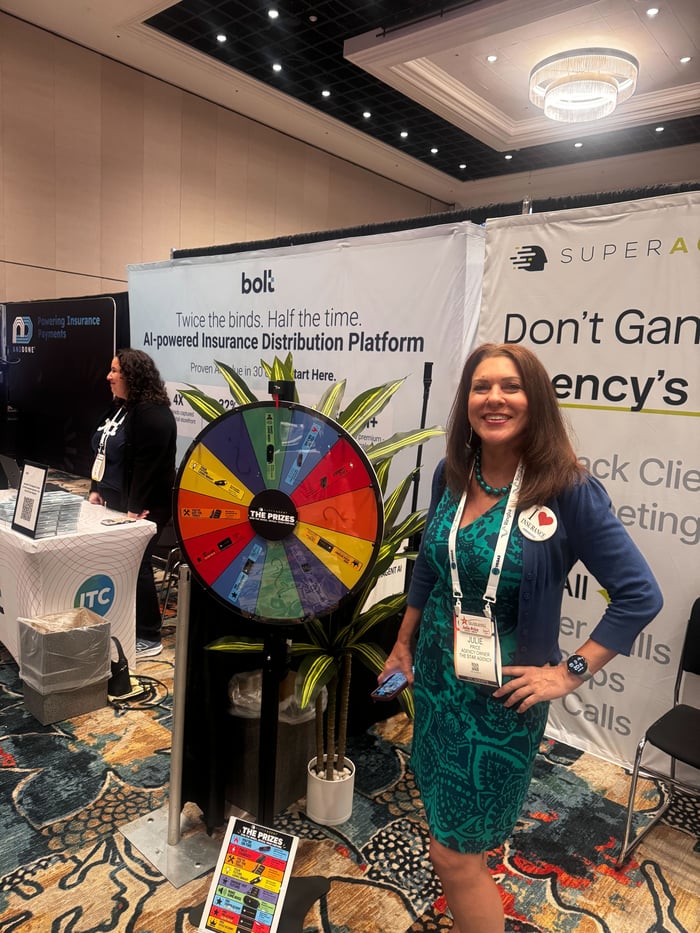
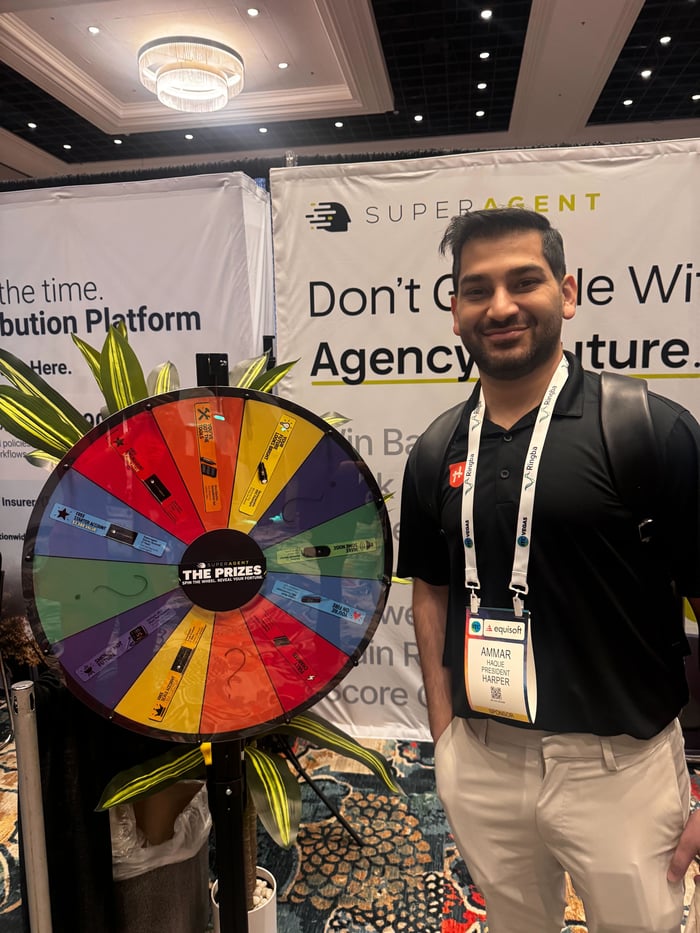
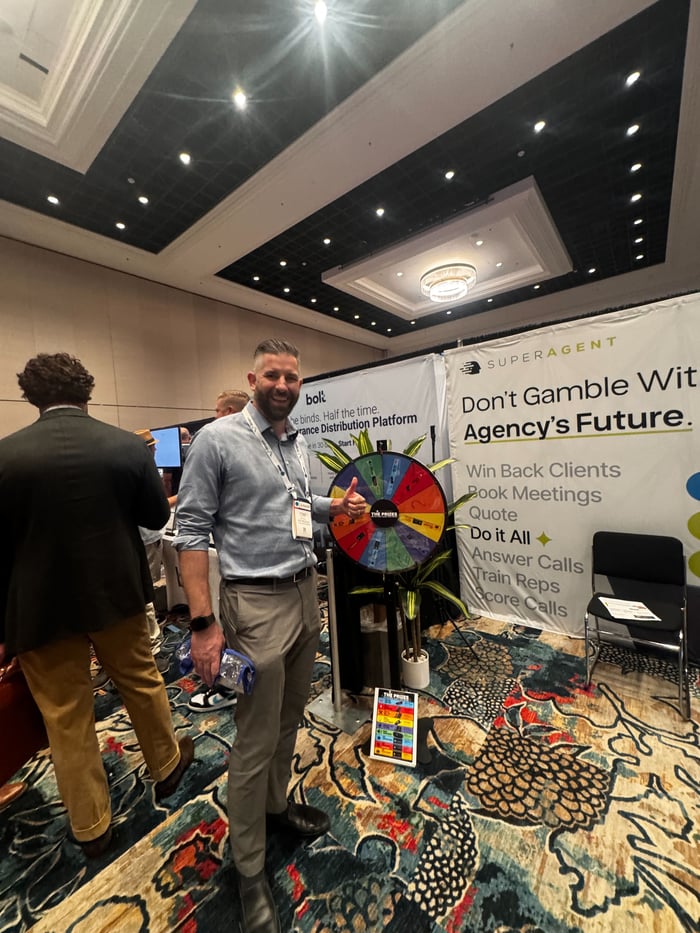
We played games, and people won big
Our booth games brought the fun to ITC. The prize wheel kept spinning all week, and our winners walked away with one free year of SUPERAGENT.
Congratulations again to every winner. We can't wait to help your agency grow this year.
.jpg?width=700&name=IMG_4573%20(1).jpg)
A live webinar from the ITC floor
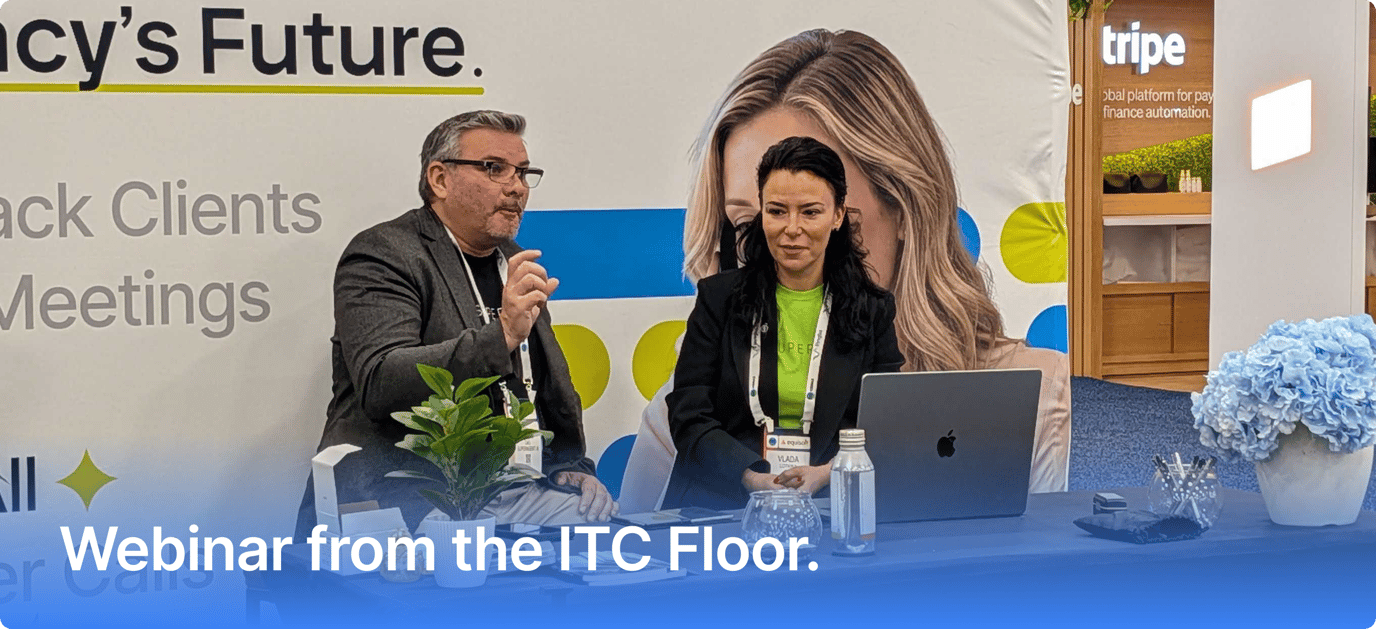
We streamed a live session straight from Vegas to show how SUPERAGENT works inside a real agency day. SUPERAGENT CEO Vlada Lotkina and CMO Wil Salguero went live from the expo floor for How Insurance Agencies Really Use AI to Drive Results, with one rule: no hype and no roadmap slides.
Here is the full session, followed by the moments agency owners have asked us about most since.
Jump to a chapter
1:40 Only 8% of agencies · 3:33 Cross-selling monoline customers · 5:43 Ramping new producers · 8:28 The after-hours call · 11:25 Why a generic chatbot is not enough · 13:02 Rapid fire takeaways
The number that framed everything: 8%
Vlada opened with the stat that surprised her most at ITC. Despite all the talk, only 8% of agencies have AI embedded in their daily workflows in 2026, according to the Big "I" ACT 2026 Tech Trends Report. Everyone else is still experimenting.
Her rule for getting into that 8% is simple: AI has to solve a specific problem that is unique to your agency. Every agency has its own strengths and gaps. If your outbound team already runs well, that is not where you start. Maybe it is renewals and proactive cross-sell, which drive retention and profitability and are almost always overlooked.
Start with the size of your agency, not the tool
A team of two or three
Automate as much as you can. Pick the process that hurts most, whether that is new sales, the front desk phone, service work, cross-sell or retention, and let AI carry it so a team of three can punch above its weight.
A larger agency
The bigger opportunity is not replacing work, it is elevating the people you already have. That is where the Training AI Agent and the Live Call AI Agent do their best work: when there are enough producers to train and level up.
Use case 1: turning monoline customers into multi-line conversations
Wil set up a scenario every owner knows. You hand a producer a list of monoline customers and say "call all of them." They get through the first page, then the day takes over. Here is how Vlada walked through the same campaign with SUPERAGENT:
- Connect your AMS (AgencyZoom and HawkSoft today) so you can see who is monoline and what is missing compared with the coverage they should have.
- Segment those customers in a few clicks.
- Launch a multichannel campaign that combines email, text and phone conversations to open the door and gauge interest.
- Gather the first details: do they already have that coverage, and who is it with?
- Hand off warm. Book the appointment on a producer's calendar with the qualification notes attached, or warm transfer straight to the agency.
The producer walks into an informed conversation instead of a cold list. Vlada called it one of the workflows every agency should look at closely.
Use case 2: ramping new producers, "train hard to close easy"
People are the hardest part of owning an agency. Recruiting is tough, ramping a new producer takes six to seven months on average, and many leave before they get there. That is expensive.
The Training AI Agent gives any agency a structured onboarding program built on AI roleplay. New producers practice how insurance should be sold across multiple lines of business, against the objections that actually show up on the phone, until they are comfortable and confident before they touch a live lead.
Then the Live Call AI Agent connects to your phone system and scores real customer calls after they happen. The highest-performing agencies combine the two: the gaps found in real call reviews become the next roleplay scenarios. Vlada described it as a complete performance system, and a must-have for any agency with more than a handful of people.
Use case 3: the after-hours call (meet "Julie")
The office is closed. Traditionally that call goes to voicemail, a web form or an inbox nobody checks until morning. Wil walked through what happens when the Inbound AI Agent answers instead. It already knows your agency, and because it is connected to your AMS, it recognizes the caller: "Hi Julie, I see you have an auto policy with us. How can I help?"
If Julie was just in an accident
The first question is whether she is okay. If she is still in the car, it tells her to call 911 and call back when she is safe. If she is fine, it points her to her carrier's claims line or warm transfers her to the team. It routes the claim; it does not try to handle it.
If Julie wants to add her new driver
Her son just turned 16. The office is closed, but the agent collects everything needed and sends it to a licensed producer, who has the full picture to prepare the quote, call Julie back and get the policy bound.
Wil called it one of the most impressive use cases he saw at ITC, and it is where a lot of agencies choose to start.
Quoting without typing
Both of them gave the same answer to "what will agencies stop doing in three years?": manual quoting data entry. Vlada pointed out that it takes the people on the front line, the ones who should be selling and who are not cheap, and turns them into data entry clerks. Wil called it "catastrophically archaic": copying information into a rater, then copying it all again into a carrier portal. "It is almost like faxing."
That is the job of the Quoting AI Agent. It pulls the details from the conversation, structures them, fills the forms and updates your AMS or CRM, so nobody on your team has to retype anything.
Why a general-purpose chatbot is not the same thing
Plenty of people at ITC told us some version of "I built my own AI calling system with a public chatbot." Wil was clear: those tools are fantastic, and SUPERAGENT runs on top of the most advanced models available. The difference is what the AI was trained on.
Ask a general chatbot how to sell auto or life insurance and it will give you a reasonable answer pieced together from what it read online. It is not bad, but it is not reality. SUPERAGENT is trained on real human-to-human insurance calls from top producers, and it learns your agency's customers and your best practices. That is the difference between an answer that sounds right and an objection handle that actually works on the phone.
Wil's warning for anyone tempted to build their own: a platform you put together over a weekend is easy to demo and hard to maintain. When it breaks in month two, you own it. Work with companies that have been doing AI and technology for a while.
Rapid fire: their number one ITC 2026 takeaway
Vlada Lotkina, CEO
Lead with real data. Write down where a workflow was before you changed it, then measure it again three weeks and two months later. Most of these workflows show impact within a single monthly cycle, so you can actually prove it.
Wil Salguero, CMO
Everybody has "AI" next to their name now. That is exactly why agencies and producers need to know what they are buying, ask for a real track record, and be wary of anything that was quickly put together and cannot be maintained.
Prefer to read the expanded version? Here is our full written breakdown: How Insurance Agencies Really Use AI to Drive Results.
We even played with a robotic dog
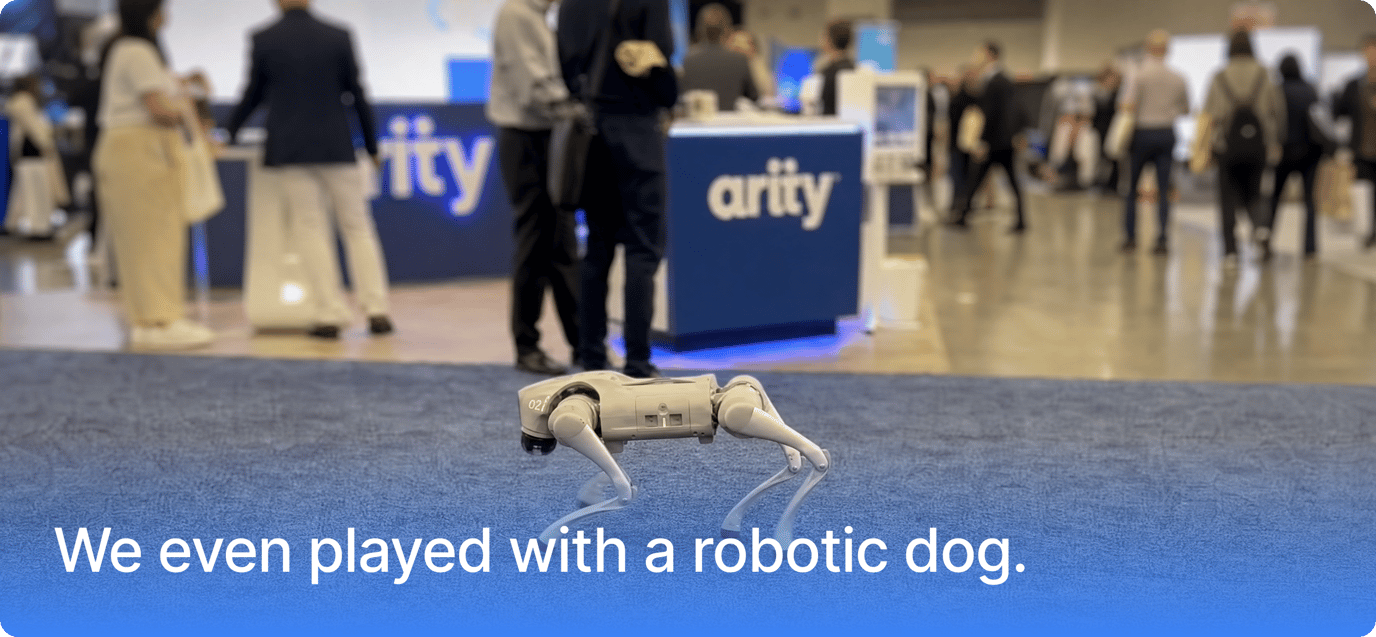
Not everything at ITC was about agency workflows. Some of it was about a robotic dog trotting past the booths. We are not adding one to the product. Probably.
The conversations were the best part
Again and again, agency leaders told us the same four things. They want to quote faster, answer every call, follow up with every lead, and keep the clients they already worked so hard to win. None of them asked for "more AI." They asked for more hours in the day.
- Quote faster. Most of the time on a quote is not quoting, it is retyping. The Quoting AI Agent takes the manual data entry off your team: it pulls the details from the conversation, structures them, fills the forms and updates your AMS or CRM, so your producer starts with clean data instead of a blank screen.
- Answer every call. The call that comes in at lunch, at 5:01 PM or on Saturday is often the one that was ready to buy. An AI voice agent picks up, captures the details or books the appointment, and hands off to a person with full notes.
- Follow up with every lead. Speed to lead decides who writes the policy. Outbound AI Agents reach every new lead quickly and book the conversation onto a producer's calendar, so producers spend their time closing instead of chasing.
- Keep the clients you already won. The most predictable revenue in an agency is the book you already have. Renewal and cross-sell outreach makes sure every client hears from you before a competitor calls them.
And the part every owner cared about: producers still close. SUPERAGENT takes the busy work off the team's plate. It does not take the relationship.
What we're taking home from Vegas
1
AI is no longer optional for agencies. The agencies moving now are building a head start that is hard to catch. Every month they run it, they answer more calls, follow up faster and learn more about their own book.
2
Generic AI is not enough. Insurance has its own language, its own workflows and its own rules. AI that was not built for insurance has to be taught everything. SUPERAGENT AI already speaks it.
3
People still win. The best agencies are using AI to take the busy work off their team's plate, so their people can spend more time selling, advising and building relationships.

Your agency, one conversation away
If you met us at ITC, thank you for stopping by. Thank you for the questions, the stories from your agency, and the energy that made our corner of the floor one of the busiest in the hall.
If you couldn't make it to Vegas, let's bring the booth to you. Book a time with our team and we will walk you through SUPERAGENT AI using your own agency's processes. What happens in Vegas shouldn't stay in Vegas.
Save my seat on the calendar →
Missed our live webinar? Watch the replay
How Insurance Agencies Really Use AI to Drive Results, live from ITC Vegas. Scroll back up to the webinar section, or watch it on YouTube.

Comments