.png?width=239&height=25&name=Logo%20horizontal%2001%20(1).png)
Two years ago, “AI for insurance agencies” mostly meant a website chatbot that irritated shoppers and booked nothing.
In 2026, the conversation has moved on. According to the Big “I” Agents Council for Technology (ACT) 2026 survey, two thirds of independent agencies plan to expand their AI use in the next twelve months, 38% say they are very likely to and 30% somewhat likely.
The question in agency owners’ heads is no longer “should we?” It is sharper and more expensive to get wrong: “Where does this actually pay off, and where am I about to burn a quarter and an E&O headache?”
This is that playbook. No robots taking your book of business, no magic. J
Just the workflows where AI earns its keep in a real agency, the ones that are still hype, and a rollout sequence that does not blow up your compliance posture.
How are insurance agencies actually using AI in 2026?
Insurance agencies in 2026 mostly use AI in the front office: answering and qualifying inbound calls, following up on leads, and workflow automations that are granular, not holistic.
Adoption is broad but shallow, and the agencies seeing returns treat AI as staff aimed at one workflow, not as software they bolt on everywhere.
Where AI adoption really stands
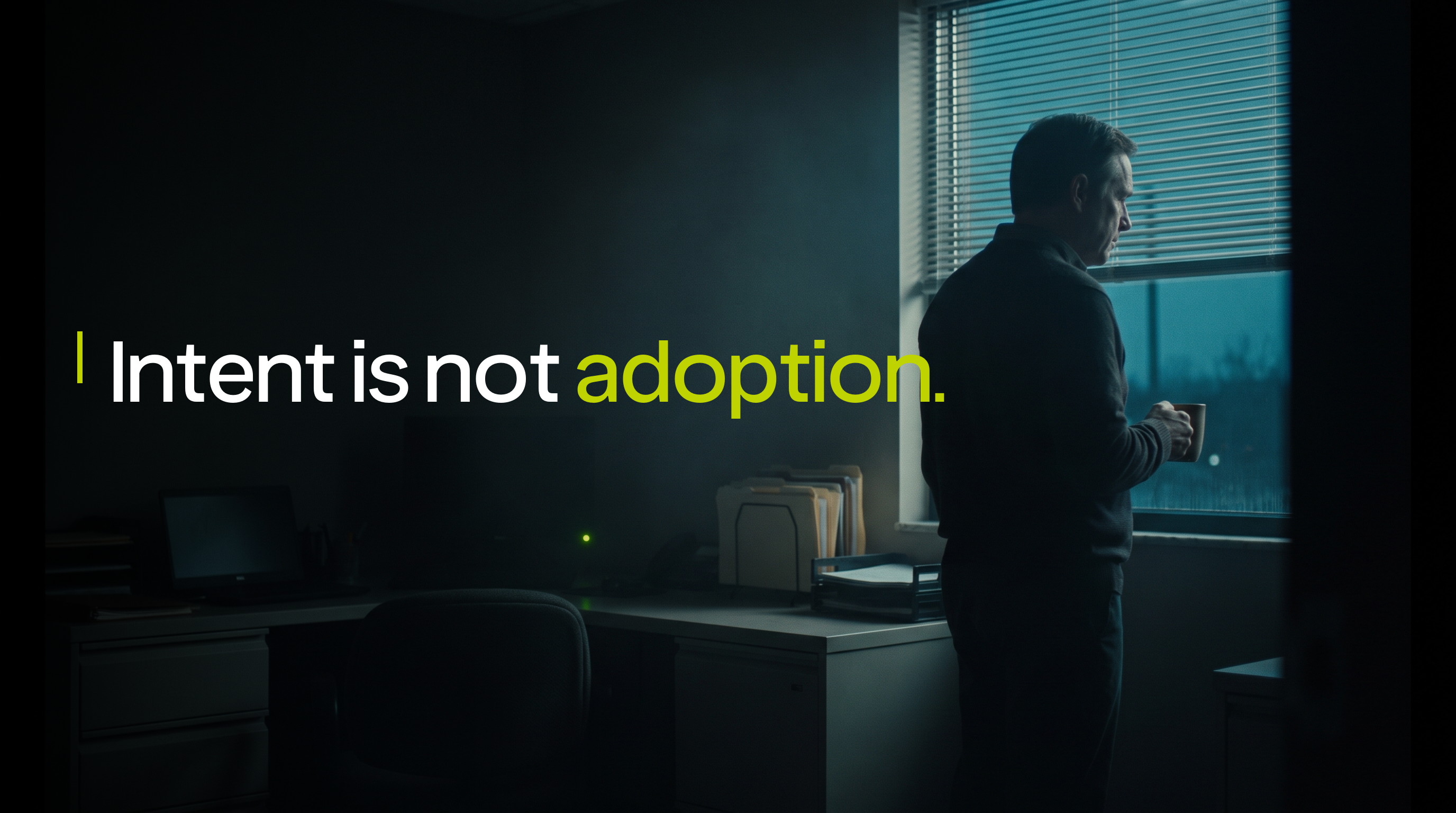
Intent is running well ahead of practice, and that gap is the real story.
The ACT 2026 survey found that while two thirds of agencies plan to expand AI, current usage is thin: 33% are only experimenting, 22% use it in limited areas, and just 8% have it embedded in daily workflows.
Thirty one percent are not using it at all. The top motivations are practical, operational efficiency (60%) and staff productivity (52%), not some futuristic ambition.
The top concerns are equally grounded: data privacy and compliance risk (24%) and inaccurate outputs (22%).
The most telling number is about governance. Fifty five percent of agencies have no written AI use policy, 23% have one in development, and only 13% have a formal policy in place.
Translation: most of the industry is using AI faster than it is governing it. That is both the risk and the opportunity. The agencies that pair adoption with a simple policy will move faster and sleep better than the ones improvising.
.png?width=2008&height=1432&name=Frame%201000007834%20(1).png)
The Front-Office Five: where AI actually pays
Ignore the noise and AI value in an agency concentrates in five front-office workflows. Think of them as a ladder: each rung protects revenue you are already paying to earn.
1. Answering every inbound call. Agencies lose a meaningful share of inbound calls after hours and during the midday rush, and the shopper who does not reach you calls the next agency. AI receptionists answer, qualify, and book appointments 24/7. This is the fastest payback in the category, because a missed call is a missed quote, full stop. Metric to watch: percentage of inbound calls answered, and after-hours booking rate.
2. Working every lead, fast. Speed to lead decides who binds. The often-cited “respond in five minutes” rule traces to the MIT and InsideSales.com lead response study led by Dr. James Oldroyd, which found a lead contacted within five minutes is far more likely to be qualified than one contacted at thirty minutes. A follow-up Harvard Business Review analysis of 1.25 million leads found that responding within an hour made firms roughly seven times more likely to qualify a lead than waiting one more hour. Most agencies cannot hit those windows by hand. AI that starts multi-channel follow-up the instant a lead lands, and keeps going, converts the leads you already bought. Metric: average minutes to first contact, and follow-up attempts per lead.
3. Ramping producers faster. New-to-industry producers can take twelve to eighteen months to reach independent production, and the reps they need to get good usually come from your real leads. AI practice partners let a green producer rehearse real objections and lines of business before they ever touch a live customer. Metric: weeks to first close, and practice reps per producer per week.
4. Reviewing calls after they happen. Manual QA covers a tiny fraction of calls, so managers coach from anecdotes. AI that records, transcribes, and scores every call turns your own conversations into a coaching engine. The honest version of this is post-call intelligence, not a magic live whisper in the producer’s ear. Metric: percentage of calls scored, and coaching actions per producer.
5. Protecting and growing the book. Your cheapest growth is the book you already have. Industry research pegs the cost of acquiring a new customer at roughly seven to nine times the cost of retaining one, and cross-selling is the lever: clients with three or more policies retain around 94% annually versus about 67% for single-policy clients (SIAA). AI that runs systematic coverage reviews, thank-you outreach, and cross-sell discovery compounds quietly. Metric: retention rate and policies per household.
The cost of standing still & not using AI

Owners feel the leaks but rarely size them. Here is an illustrative model. Plug in your own numbers; the point is the shape, not the exact figures.
|
Leak |
Illustrative assumption |
Annual impact |
|
Missed inbound calls |
20 calls/month go unanswered, 25% would have quoted, avg commission $300 |
~$18,000 |
|
Slow or no lead follow-up |
200 leads/month, 30% never worked, 3% of those would bind |
~$65,000 |
|
Slow producer ramp |
1 new hire ramping 4 months slower than possible |
tens of thousands in unwritten business |
|
Preventable churn |
84% retention vs a reachable 90% on a mid-size book |
five to six figures in renewed commission |
None of these require buying more leads or hiring more people. They require closing the gap between the work that should happen and the work a busy team can actually do by hand. That is precisely the gap AI is good at.
.png?width=1512&height=1089&name=Frame%201000007849%20(1).png)
What is still mostly hype in 2026
Being useful means being honest about the ceiling. Treat these three with skepticism.
“AI that spits out bindable quotes.” Rating and binding run through carriers and their rules. What good AI does today is remove the manual data entry around quoting, capturing information from the conversation and keeping your systems current so producers stop retyping the same data three to five times. That is real and valuable. A bindable quote appearing from thin air is not.
“AI that replaces your producers.” The agencies winning with AI use it to delete busywork so producers spend more time advising and closing. The relationship still binds the policy. Any pitch built on shrinking your team should raise a flag, for results and for how your clients will feel.
“Fully autonomous, set it and forget it.” With 55% of agencies lacking an AI policy, the last thing you want is an AI changing customer records or sending messages with no human sign-off. The agencies staying out of trouble keep a person approving anything customer-facing. That approval step is a feature, not a limitation.
Vertical AI beats general AI, and it is not close

The biggest divide in 2026 is not one vendor versus another.
It is general AI versus Vertical AI built for insurance.
General tools know a little about everything and nothing about your renewals, your carriers, or your objection playbook.
Purpose-built systems speak the language natively and plug into your agency management system.
A five-step rollout that will not blow up your compliance
You do not need an AI committee. You need one workflow and a number to move.
- Pick one expensive bottleneck. Missed calls, cold leads, slow ramp, or thin call visibility. Start where the pain costs the most.
- Attach a metric before you start. Speed to lead in minutes, percentage of calls answered, weeks to first close, retention rate. If you cannot measure it, you cannot defend the spend.
- Keep a human in the loop. Choose tools that let you approve customer-facing actions. This protects the client experience and your license.
- Write a one-page AI use policy. Since 55% of agencies have none, a simple page on what AI may touch, what it may not, and who reviews it puts you ahead of most of the market and reassures carriers.
- Prove it, then expand. Run the first workflow for 30 to 60 days, confirm the metric moved, then add the next rung. Depth beats breadth every time.
Your first 90 days with AI, in practice

Depth beats breadth, so treat the first quarter as one workflow proven end to end, not a platform rollout.
Days 1 to 30, instrument and pick. Turn on measurement for your chosen bottleneck before you change anything, so you have a baseline. If it is speed to lead, log average minutes to first contact and contact rate this month. If it is missed calls, log answer rate and after-hours volume. Write your one-page AI use policy in this window while it is top of mind.
Days 31 to 60, deploy narrow. Put AI on the single workflow, with a human approving anything customer-facing. Resist the urge to switch on everything at once. Watch the baseline metric weekly and fix the prompts, scripts, or routing that are not landing yet.
Days 61 to 90, prove and decide. Compare the metric to your day-one baseline. If speed to lead dropped from hours to minutes, or your answer rate climbed, you have a documented win and a reason to fund the next rung. If it did not move, you learned that cheaply, on one workflow, without betting the agency. Then, and only then, add the next item from the Front-Office Five.
This cadence is exactly why the 8% of agencies with AI embedded in daily workflows have pulled ahead of the third that are still only experimenting: they went deep on one thing, proved it, and expanded, rather than dabbling across five and abandoning all of them.
What to look for in AI built for insurance
When you evaluate, ask three questions and watch the demo, not the deck.
Does it understand insurance without me teaching it every time? Does it work with the systems I already run, my AMS and my phone? Does it make my people better instead of trying to replace them? If the answer to all three is yes, and there is a human approval step on anything that touches a customer, you are looking at something that will actually stick.
Frequently asked questions
Is AI adoption in insurance agencies worth it in 2026? For most agencies, yes, when it is aimed at a specific bottleneck like missed calls or slow lead follow-up. The ACT 2026 survey shows two thirds of agencies plan to expand AI, but the ones seeing returns start with one measurable workflow rather than automating everything at once.
What is the fastest AI win for a small agency? Answering and following up on inbound leads. The shopper who reaches a live answer first usually buys, so closing the after-hours and speed-to-lead gap tends to pay back fastest.
Does AI replace insurance producers? No. The effective pattern is augmentation: AI removes repetitive outreach and admin so producers spend more time advising and closing. The relationship still wins the deal.
Do I need an AI use policy for my agency? Yes, and most agencies do not have one. A simple one-page policy covering what AI can access, what requires human approval, and who owns oversight reduces E&O and compliance risk and is table stakes for working with carriers.
What is the difference between general AI and insurance-specific AI? General AI is broad and shallow. Insurance-specific, or vertical, AI understands carriers, lines of business, agency management systems, and objection handling out of the box, so it produces useful work without heavy prompting.
How much does AI for an insurance agency cost? It varies by scope and vendor. The better question is cost of inaction: model your missed-call, slow-follow-up, and churn leaks first, then judge any tool against the revenue it recovers.
The biggest AI launch in insurance history is almost here.
On Monday, August 11, 2026, the industry gets its first look at what vertical AI built for insurance agencies can really do, live. Seats are free.
Save your seat for the SUPERAGENT 3.0 keynote.
Register free.

.png?width=520&height=294&name=hf_20260806_204231_f3f8ad5d-f30a-44bf-927d-2bfce7f4d6df%20(1).png)


Comments